

On time, or a full refund.How the guarantee works

White label web development for agencies

Your Figma, built exactly as designed.

White label web development from your Figma. A senior developer builds it on the platform you pick, then someone who didn’t build it checks it at 6 breakpoints before you see staging. You pay a fixed price per template, the first one takes 5 business days, and the only name on it is yours.

  • On time, or a full refund
  • Checked at 6 breakpoints before you see it
  • A fixed price per template
  • 30-day bug warranty

Why development is where agency projects go wrong.

The design gets signed off. Then the build comes back with problems nobody designed, and your team spends the week listing them.

  • Spacing that drifts from the design
  • Fonts that swap, or render differently
  • A menu that breaks on a phone
  • A QA list longer than the brief

Nobody on the development side owns the problem, the timeline slips, and your creative director takes the heat in front of the client. We had builds come back like that from partners at our old agency, and it’s why StudioPartner works the way it does: your assigned Project Manager answers for the project from kickoff to handover, and our QA happens before yours.

Your Project Manager works your business day, in the US, the UK, Europe, the Gulf or Australia. See our hours by region

White label website development on four platforms.

Pick the platform, or ask us which one suits your client. Each has its own page with the details, a demo and the prices.

  • WordPress

    Bricks Builder or a custom theme, chosen per project, with content your client can edit without breaking the design. WooCommerce stores too. Elementor if it’s a hard requirement; never Divi.

    WordPress builds
  • Shopify

    Online Store 2.0 themes, built as sections and blocks your client can rearrange in the theme editor, with the theme code in your Git.

    Shopify builds
  • Webflow

    Client-First when your client’s site already uses it, otherwise our own documented class system, with CMS collections your client can manage. Built in your Workspace.

    Webflow builds
  • Headless (Next.js & Astro)

    Next.js or Astro in TypeScript, on Sanity, Contentful, Storyblok or WordPress as a headless CMS, in your Git and deployed to your client’s own hosting.

    Headless builds

Turning Figma or PSD files into WordPress is the job we do most. It has its own page:Figma to WordPress

How we keep the build faithful to the design.

The same five steps on every build, whatever the platform.

  1. We read the file before we quote.

    A developer goes through your Figma for missing states, mobile frames and components, and tells you what’s missing before the clock starts.

  2. We build from your tokens.

    Colours, type and spacing come from your Figma styles and variables. Nobody eyeballs a screenshot.

  3. 6 breakpoints, on real devices.

    360, 390, 768, 1024, 1280 and 1440 px, fluid in between, on real phones and tablets, in the latest two versions of Chrome, Safari, Firefox and Edge.

  4. Someone who didn’t build it checks it.

    They compare the build with your design at every breakpoint, and you get the side-by-side design and build screenshots.

  5. You see staging last.

    The developer checks their own work, then internal QA runs our checklist: function, forms, links, responsive, browsers, accessibility, speed and SEO basics. Staging reaches you only after it passes.

What comes back

  • A delivery date in writing, confirmed the day the checklist is complete
  • Your assigned Project Manager on your email domain, in your tools
  • Staging on your subdomain, and a written update every week
  • The work in your accounts from day one: your CMS or Webflow Workspace, and your Git for Shopify and headless builds
  • All rights in the work once the order is paid
  • A handover document in your branding, and a walkthrough video where your order includes one
  • The side-by-side screenshots and the lab speed results from handover
  • A 30-day bug warranty after launch

Everything here is in your order.

A build that doesn’t match the Figma you approved is a defect, and defects are always fixed free.

Built by our team.

Sites our developers built, each with the platform it runs on.

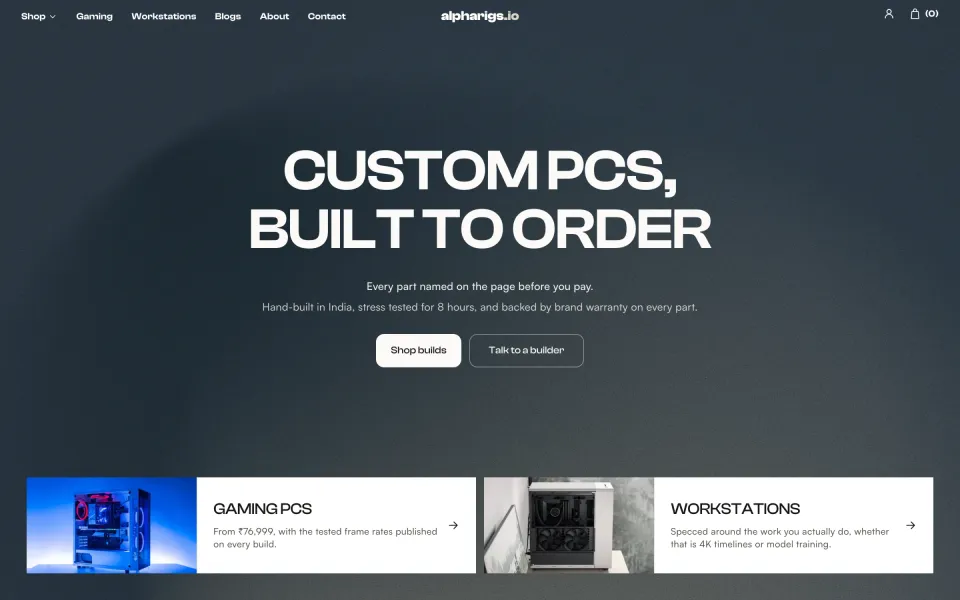
  • The AlphaRigs homepage, headed Custom PCs, built to order.

    eCommerce design & development · 2026

    AlphaRigsBuilt on Astro

    A builder of custom gaming PCs and workstations. Every build has its own page with the full parts list, tested frame rates and a price, and a short quiz points a buyer to the right machine.

    About this project: AlphaRigs
  • The NTRO homepage, headed Driving Excellence in Infrastructure Measurement.

    Web design & development

    NTROBuilt on Webflow

    A national transport research organisation. One site for its services across road, rail, ports and airports, its software products, a training catalogue and a large library of news and research.

    About this project: NTRO
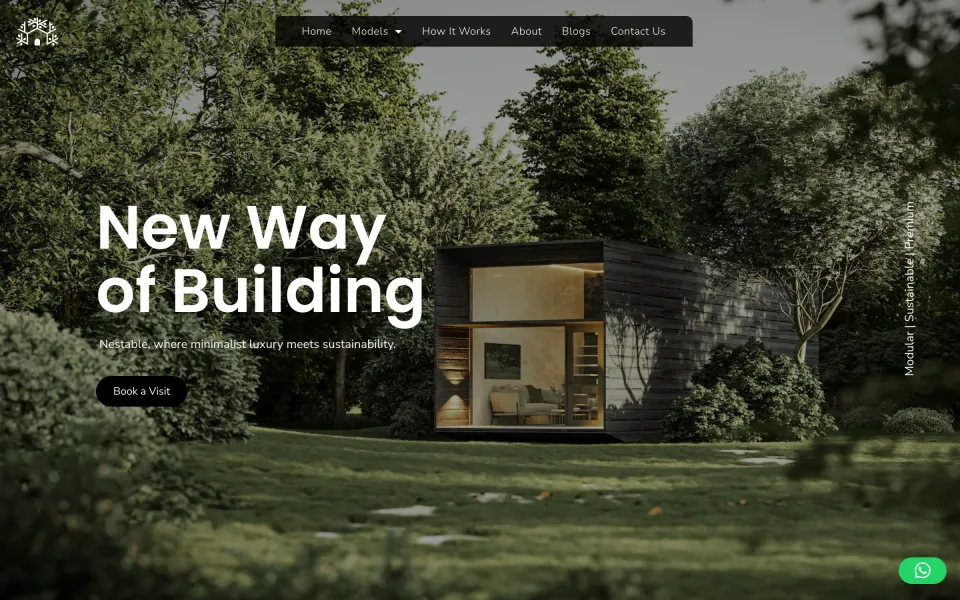
  • The Nestable homepage, headed New Way of Building, over a photo of a timber cabin among trees.

    Web design & development · 2025

    NestableBuilt on WordPress

    A modular home builder with three models. Each model has its own page and brochure, the build is shown as one timeline, and every page ends on the same step: book a visit.

    About this project: Nestable
See all work

Shown with written consent. Your own clients’ work only ever appears here if you say so.

White label website developers who own the outcome.

The same people stay on your project from kickoff to handover, and work in it the way someone on your staff would.

  • One person accountable

    Every project has an assigned Project Manager and a named backup who both know it. If your Project Manager is away for more than 2 business days, the backup takes over.

  • The people who built the portfolio

    Our team has shipped 200+ projects over 4 years, and those same people work on yours. We never hand your work to freelancers without your written consent.

  • Part of your team

    An email address on your domain, a seat in your Slack or Teams, a place on your board, and for Shopify and headless builds, commits to your Git. Your designers message us the way they’d message anyone else in the agency.

Inside your agency, from day one.

Day 1
You create our accounts on your domain and add us to your tools.
Your Project Manager writes as
name@youragency.com
Your hours
Your business day. We aim to reply within 2 working hours, your time.
Every week
A written update in your tool, with a staging link.
Staging lives on
preview.youragency.com
At handover
Everything is already in your accounts. You switch our access off.

Whatever tools you use, we work in them.

We fit into your workflow: your email, your chat, your board, your Git and your Figma. Below are the tools agencies use most; if yours isn’t there, we’ll work in it anyway.

Email and chat

  • Google Workspace
  • Microsoft Teams
  • Slack

Boards

  • ClickUp
  • Asana
  • Trello
  • Jira
  • Linear
  • monday.com
  • Notion
  • Basecamp

Code and design

  • GitHub
  • GitLab
  • Bitbucket
  • Figma

The guarantees behind every build.

Your order commits us to these four. The full terms are on the trust page and in the Partner Agreement.

  • On time, or a full refund

    Your signed order sets the delivery date. If we miss it for a reason on our side, the whole project fee comes back. You don’t have to claim it.

    How the guarantee works
  • Never in front of your client

    We never contact, pitch or quote your client, during the project or after it. If they contact us, we decline and tell you within 1 business day.

    Read the zero-poach terms
  • No trace of us

    Anything your client sees is free of our name, credits, links, tracking and metadata. If something slips through, it’s a defect, and we fix it free.

    How we keep it confidential
  • 30-day bug warranty

    Anything we built that breaks in the first 30 days after launch is fixed free, however small.

    Read the Partner Agreement

White label web development services, at a fixed price per template.

You pay per unique template, however many hours it turns out to take. The price is agreed in writing and changes only if the scope does, once you’ve approved the change.

Custom code (Next.js or Astro)

Your Figma, built as a static business site in Next.js or Astro.

$200per template

+ Set-up and launch $150 per project

6 business days for the first template, +3 for each extra · on time, or a full refund

  • Next.js or Astro in TypeScript, on the CMS your client edits
  • Code in your GitHub, GitLab or Bitbucket, a pull request per change
  • Built from your Figma as reusable components
  • One round of tweaks on staging, and every defect fixed

Set-up and launch, once per project, covers staging, CMS set-up, QA and launch.

Not sure what you need?

Walk us through the project on a 20-minute call. You’ll get a written scope, a fixed price and a turnaround within 2 business days of the call.

Or send a brief

Quoted at a fixed price after the call:

  • Custom features or integrations
  • Web apps and portals, after a Scoping Sprint
  • Rebuilds and migrations from another platform

New to us? Start with a pilot project, paid through escrow.

Add-ons and single services

Add them to any build, or order them on their own. Each has a fixed price.

  • Additional page

    A page built from an existing template, up to 1,000 words and your images placed, with QA.

    $50 per page+1 business day per 5 pages

  • A template designed

    Missing a layout? We design it in Figma to match your system, desktop and mobile.

    $150 per template3 business days for the first template, +2 for each extra

  • Integration

    A CRM, email platform or booking tool, connected through an existing plugin, app or connector, tested and documented.

    $100 per integration2 business days

  • Integration, custom code

    On a Next.js or Astro build, or any connection written against an API. Scoped on a call, then a fixed quote.

    Quoted after a callDate in the quote

  • Content migration

    Pages or posts moved into the new CMS. We choose the method, and check the result by hand.

    $100 per 25 pages or posts3 business days per 100 pages or posts

  • Scoping Sprint

    For anything bigger or unusual: requirements, flows and a fixed quote, credited against the build if you go ahead within the window in your order.

    $5005 business days

Cheaper than a developer on payroll in a quiet month.

A developer on staff costs you a salary, overheads and a bench when the pipeline dips. We cost a fixed price per project, and only when there is one, yet we still work inside your tools like someone on staff.

You could also send the build to a freelancer or an outsourcing company. Our guide compares the four options, with how to brief and vet whoever you pick.

Try us on one template first.

One template from your Figma is the quickest way to see how close our build gets to the design. Pick that, or any other item on our price list, and judge us on it.

  • Your first project is paid through escrow, and the money is released as you approve the work.
  • Not happy with it? We fix it within 5 business days. Still not happy? You don’t pay (once per agency).
  • Like every fixed-price project: on time, or a full refund.

Web development questions.

What agencies ask before they send us their first Figma file.

All questions

You sell the build to your client as your agency’s work, and we develop it from your designs. Your client only ever deals with you. We write from email accounts on your domain and work inside your tools; we never contact your client, and nothing in the code, footer or metadata names us.

We charge per unique template, at one of two prices: $100 per template on WordPress, Webflow or Shopify, or $200 per template in custom code (Next.js or Astro). Set-up and launch is $150 once per project and covers staging, CMS set-up, QA and launch. Extra pages built from an existing template are $50 each. So a 12-page WordPress site from 5 templates comes to $1,000, as a fixed price agreed in writing.

It includes each template built from your design, CMS set-up so your client can edit the content, QA at 6 breakpoints by someone who didn’t build it, staging on your subdomain, the launch, a handover document in your branding and the 30-day bug warranty. Design, content migration and integrations with other tools aren’t included, but you can add any of them at their published prices. Page copy isn’t included either; we can write it for an extra fee, quoted before we start. We don’t sell photography or hosting.

The signed order, the brief on our template, the Figma file with desktop and mobile frames, final copy (or an agreed content deadline), the fonts and their licences, access to hosting and the domain (or your go-ahead for staging on your subdomain), and email accounts on your domain for our team. That’s the Ready-to-Start checklist, and on the business day it’s complete, we confirm the delivery date in writing.

Only if the scope changes: more templates or pages, an extra integration, or a brief that changes after sign-off. Any change is quoted in writing first, and nothing goes on the bill until you’ve approved it.

Then it’s a defect, and we fix defects free, every time. A defect is anything that doesn’t match the Figma you approved, or doesn’t work the way the order describes. Before you see staging, someone who didn’t build it compares the build with your design at every breakpoint and sends you the side-by-side screenshots, so we usually catch a mismatch before you do.

No. Figma is our default, but we also take Adobe XD and layered PSD files. Turning a Figma or PSD design into a WordPress site has a page of its own: Figma to WordPress.

It depends on how many unique templates there are. On WordPress, Webflow or Shopify a build takes 5 business days for the first template, +2 for each extra; in custom code (Next.js or Astro) it takes 6 business days for the first template, +3 for each extra. So 5 WordPress templates take 13 business days, and additional pages add 1 business day per 5 pages. Set-up and launch sits inside the build time. Your signed order has the exact delivery date. The clock starts the business day after your Ready-to-Start checklist is complete and counts business days. It pauses only while we’re waiting on you or your client, and we log every pause in writing on the day. If we miss the date for a reason on our side, the whole project fee comes back.

Yes, once the order is paid. The work is built in your accounts from day one (your CMS or Webflow Workspace, and your Git for Shopify and headless builds), and all rights in it pass to you when the order is paid in full; you can pass them on to your client. If the build uses any of our own starter components, you get a permanent, royalty-free licence to use and maintain them as part of the site. Third-party themes, plugins and fonts stay under their own licences.

Yes, and it’s how we’d rather work. On day one you create email accounts on your domain for our team and add them to your Slack or Teams, your board (ClickUp, Asana, Trello, Jira, Linear, monday.com, Notion, Basecamp or whatever you use) and, for Shopify and headless builds, your Git. Your assigned Project Manager works your business day and aims to reply within 2 working hours during a project.

A freelancer is one person, so a holiday or a second client can stop your project. With us, each project has an assigned Project Manager and a named backup, someone who didn’t build it checks the developer’s work, and the price and delivery date are in a signed order. If we miss the date for a reason on our side, the whole project fee comes back. And the Partner Agreement bars us from contacting your client, with no end date.

WordPress (in Bricks Builder or a custom theme, plus WooCommerce), Shopify, Webflow, and headless builds in Next.js or Astro. We build in Elementor when it’s a hard requirement, but never in Divi. Not sure which suits your client? The written scope says which one we’d pick, and why.

No. We write from email addresses on your domain and work in your Slack and on your board. Our name isn’t in the footer, the code, the metadata or anywhere on staging, and if anything of ours does reach your client, that’s a defect we fix free.

Anything we built that breaks in the first 30 days after launch is fixed free, however small. After that, our care plans look after WordPress, Webflow and Shopify sites (per site, per month), and headless sites go on a monthly capacity plan.

Yes. Pick any one item as a pilot (one template from your Figma, say). It’s paid through escrow and released as you approve the work. If you’re not happy, tell us within 5 business days of the staging handover and we’ll fix it within 5 business days. If you’re still not happy within 5 business days of the fix, you don’t pay, as long as the work hasn’t been used in production. Each agency can run one pilot.

Send us the Figma. We’ll build it under your agency’s name, exactly as designed.

Next, you send a short brief and we reply with a fixed price and a delivery date in writing. You pay nothing until you sign the order.

See pricesBook a call